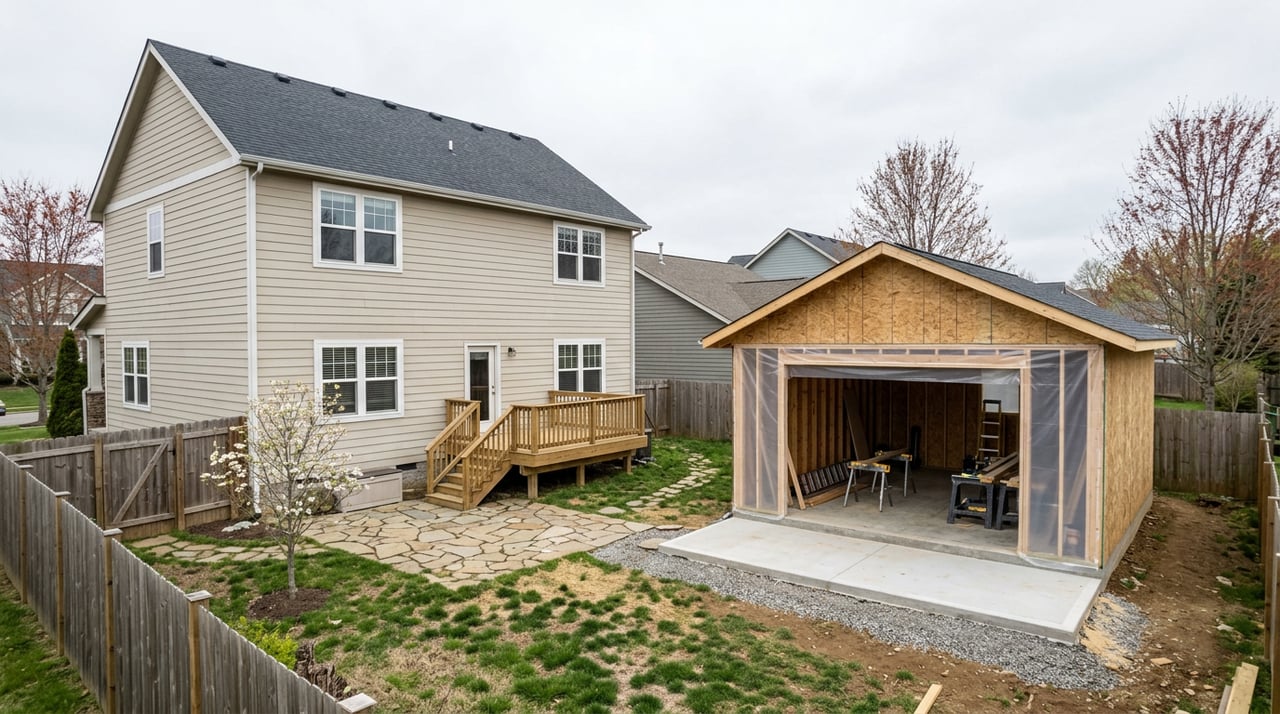
A backyard cottage in Lincoln has been technically legal since 2017, as the Lincoln Journal Star reported. If you drove through Near South, Hartley, or any of the city's older residential blocks looking for one, you'd have a hard time finding it. City officials said as much when they went back to fix the ordinance this year: the rule existed, but the math behind it made building one nearly impossible for a typical single-family lot.
To understand what changed in 2026, it helps to start with the original lot-size rule and then consider which requirements remain in place for homeowners considering an ADU.
How the Original Lot-Size Rule Worked
As 10/11 NOW reported, the original 2017 ordinance allowed ADUs, but it required the lot to have enough area to support a two-family dwelling, not just a single-family one. On paper that sounds like a technicality. In practice, most established Lincoln lots, the ones platted decades ago in neighborhoods like Everett, Near South, and the streets around East Campus, were sized for one house, not two. A homeowner with a completely ordinary single-family lot could read the ordinance, get excited, hire a designer, and then discover their property didn't clear the threshold. The unit they wanted to build in their backyard or basement simply wasn't allowed on the land they owned.
That's the mechanism worth sitting with. Legalizing something and making it buildable are not the same act. For nine years, the lot-size requirement limited how many typical single-family lots could qualify for an ADU.
What the City Council Actually Changed
On March 30, 2026, the City Council voted unanimously to revise several parts of the ordinance that limited ADU construction, as AARP reported. The amendments, filed under Lincoln Municipal Code 27.62.040, did four specific things:
- Lot area: The lot-area rule changed.
- Setbacks: attached ADUs now follow the setback of the primary residence, and detached ADUs follow standard accessory-building setbacks as long as they sit at least 60 feet behind the front lot line.
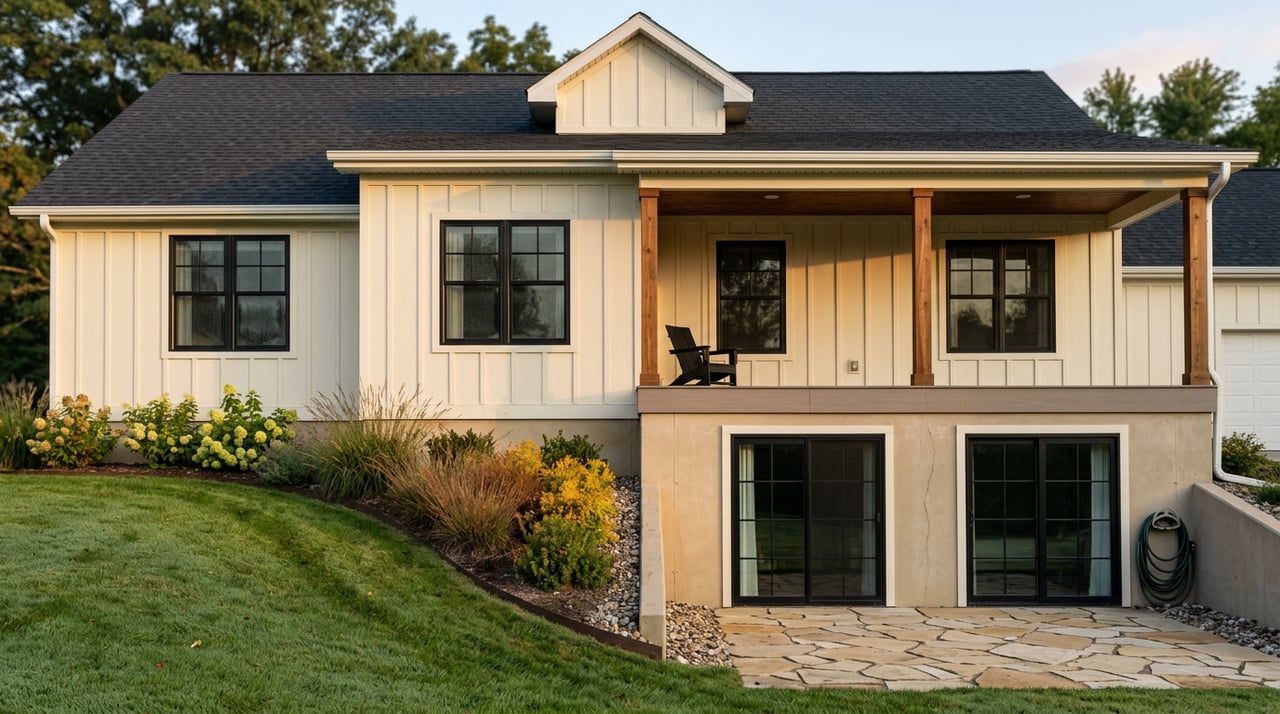
- Accessory floor area: an ADU no longer counts against a property's total accessory floor area. A homeowner with a large existing garage is no longer blocked from also adding an ADU.
- Height: ADUs now follow the height limit for the zoning district instead of being capped at the height of the main house, which had ruled out some detached and garage-conversion designs.
Mayor Leirion Gaylor Baird framed the change at the February announcement as a way to expand housing options and add income for homeowners without altering a neighborhood's character, a position echoed by NeighborWorks Lincoln CEO Charlie Wesche and Home Builders Association of Lincoln President Dan Loeck, both of whom appeared alongside her to support the amendment. The vote came two weeks after the council separately approved Lincoln's Vision Zero Action Plan, a coincidence of timing rather than a connected policy, but one that put housing and street design on the same agenda that month.
What Didn't Change
This is the part a homeowner needs before calling a contractor, because the ordinance still has real limits that trip people up.
| Rule | Still in effect after March 2026 |
|---|---|
| Size | 800 square feet or 40% of the primary home's size, whichever is smaller |
| Bedrooms | Limited to one |
| Occupancy | The lot owner must live in either the main house or the ADU |
| Utilities | The ADU must share utility connections with the main house |
| Parking | One additional off-street stall required |
| Deed restrictions | May still apply depending on the property and subdivision |
Two of these deserve more attention than they usually get. The owner-occupancy requirement means an ADU cannot become a straightforward rental-only investment property where the owner lives elsewhere. And the shared-utility-connection rule sounds like a formality until you actually need a new water or sewer tap, at which point it pulls Lincoln's Public Works department into the permitting process alongside Building and Safety, adds a coordination step, and can bring a tap fee that catches people off guard because it never shows up in the zoning conversation.
The Two Neighborhoods With an Extra Step
If your home sits in one of Lincoln's designated historic districts, including portions of Near South and Hartley, an ADU project may also need review by the Historic Preservation Commission. For a homeowner in one of these neighborhoods, it's a step worth confirming before finalizing a design, not after.
What It Actually Costs
The zoning fix answers whether you can build. It doesn't answer whether it pencils out.
A basement conversion in Lincoln typically runs $40,000 to $80,000. A newly constructed detached unit runs considerably more, commonly $120,000 to $250,000 depending on size, finishes, and site conditions. Add architect fees, permit fees, and utility connection costs on top, especially if a new water or sewer tap is required. There is no Nebraska-specific ADU loan program, so most homeowners finance the project through conventional tools: home equity loans, HELOCs, or a cash-out refinance.
If you plan to rent the finished unit, a standard homeowner's insurance policy typically won't cover it adequately, which is worth resolving with an insurance specialist before construction wraps up rather than after a tenant moves in.
A Sequence That Avoids the Expensive Surprises
For a homeowner actually considering this, the order of operations matters more than the ordinance text.
- Confirm your lot's zoning district through Lincoln-Lancaster County Planning before hiring anyone.
- Check whether your property sits in a homeowners association.
- Confirm whether your address falls inside a historic district like Near South or Hartley.
- Get a firm answer from Public Works on whether your ADU will require a new water or sewer tap, and price that cost before finalizing your budget.
- If you're converting a basement, have a plans examiner confirm ceiling height and egress before you assume the space qualifies. Many older Lincoln homes fall slightly short of the minimum, and that's an expensive thing to discover mid-project.
Why This Matters Beyond the Permit Office
For a seller, a legally built ADU is a different kind of value proposition than an unpermitted basement apartment, since it comes with a paper trail a buyer's lender and appraiser can actually verify. For a buyer looking at older Lincoln neighborhoods, the March 2026 amendments changed several ADU rules, making it worth checking the details for a particular property. For an owner who already has family needing a place nearby, or who wants rental income without moving, the amended ordinance is worth reviewing.
FAQ
Can I get a standalone mortgage just for the ADU? Not through a Nebraska-specific program, since none currently exists. Homeowners typically finance ADU construction through a home equity loan, a HELOC, or a cash-out refinance on the primary property instead.
Can I use my ADU as a short-term rental? The amendment clarified that an ADU can be used as a short-term rental, but a property cannot have both an ADU and a separate short-term rental on the same lot in addition to the main house.
Does the owner have to live in the main house specifically? No. The requirement is that the owner lives on the property, in either the primary home or the ADU, not that they occupy the larger structure specifically.
Do these rules apply the same way outside city limits? This ordinance is specific to the City of Lincoln. Lancaster County properties outside city limits fall under separate county zoning regulations.
If you're weighing whether your Lincoln property could support an ADU, or you're comparing homes with that potential built in, it helps to talk through the zoning, the lot, and the numbers with someone who knows the neighborhood-level details before you commit to a design. Summit Real Estate works across Lincoln's established neighborhoods every day, and our property management team at RLC can also help you think through what renting a finished unit actually looks like once it's built. Contact us today.
This article is general information, not legal, tax or financial advice. Consult a qualified professional about your situation.