Three real estate reports came out this year, but they do not all describe the same market. Commercial Lending Solutions put Lincoln's apartment vacancy rate at 5.8% as of February 2026. Cascade Commercial's Q2 2026 report put the broader eastern Nebraska region at 7.3%. Lee Associates, in a market overview published in January 2026, put Lincoln's rate at 7.7%, alongside a note that Lincoln absorbed 1,300 net new units over the prior year even with a wave of new deliveries.
None of these firms made an error. They are measuring different things, and the difference matters a lot more than the headline number if you own, or are thinking about buying, a house or small multiplex you rent out in Lincoln.
The Vacancy Rate Was Never Counting Your Rental
Here is the detail that gets skipped every time someone cites a Lincoln apartment vacancy rate: the platforms that build these numbers are explicit about what they count. Point2Homes states plainly that its Lincoln rental data comes from Yardi Matrix, a market intelligence platform that covers Lincoln apartment buildings of 50 units or larger. RentCafe describes its Lincoln figures the same way, sourced from Yardi Matrix data on buildings with 50 or more units.
That threshold is not a footnote. A single-family rental house, a duplex, a fourplex, a converted triplex near campus, none of it shows up in the dataset that produces the vacancy rate everyone quotes. The number was built to describe institutional apartment communities. It says nothing directly about the kind of property most of Summit's landlord clients actually own.
This is not a knock on the reports. Investors buying 200-unit complexes need exactly this data, and Lee Associates' and Cascade Commercial's numbers are useful for that audience. The problem is when a small landlord reads "Lincoln vacancy is rising to 7.7%" and assumes it describes the competition for their three-bedroom rental on a quiet side street. It doesn't. It describes competition for a very different kind of building.
Where the New Supply Actually Sits
If you want to know whether Lincoln is genuinely overbuilding, the better question is not "what's the citywide number" but "where is the supply actually going." In Lincoln right now, the answer is specific enough to map. The Journal Star has reported on several of these projects:
- Bishop Heights, the former shopping center site at 27th Street and Nebraska Parkway, is being redeveloped into a hotel, office space, trail improvements, and two separate apartment components. Greystar has already built and opened Encore at Bishop Heights, an age-restricted 176-unit community for residents 55 and older in the Country Club District. A separate phase from EPC Real Estate Group calls for as many as 230 additional luxury apartment units on the site's northern end. RED Development, the same developer behind SouthPointe Pavilions, is also working on commercial space nearby.
- Central at South Haymarket, a 175-unit affordable housing project at 10th and N streets downtown, broke ground in March 2026.
- A 90-unit apartment building is going up on the former Pershing Auditorium site downtown, developed by White Lotus.
- Hoppe Development is developing an affordable housing project at 13th and E streets that will also house Clinic with a Heart.
Every one of these projects is either downtown, in the Haymarket, or in a single age-restricted community in the Country Club District. None of them is a single-family house. None of them is in the residential pockets where most small-scale rental inventory in Lincoln actually sits. The supply wave that's nudging the institutional vacancy rate upward is landing in a handful of corridors with different property types than your house.
The 1,300 Units Say Something Better Than "Soft Market"
It's worth sitting with the absorption figure from that Lee Associates report a little longer, because it cuts against the instinct to read rising vacancy as a warning sign. Lincoln absorbed roughly 1,300 net new apartment units over the year leading into Q1 2026, even as a large batch of new buildings delivered. That is demand keeping pace with supply, not renters disappearing. A market where vacancy ticks up because thousands of new units just opened, and people are actually moving into most of them, is a different story than a market where vacancy rises because renters are leaving.
Cascade Commercial's Q2 2026 report, which covers the broader eastern Nebraska region rather than Lincoln alone, described its own 7.3% figure as trending toward improvement as new supply gets absorbed, alongside asking rents of $1,195 a month with a forecast climbing toward $1,234 over the next year. The Lincoln reports tell a consistent story: Lincoln built a lot of apartments, mostly downtown and in a couple of named corridors, and renters are filling them.
What This Means If Your Rental Is a House
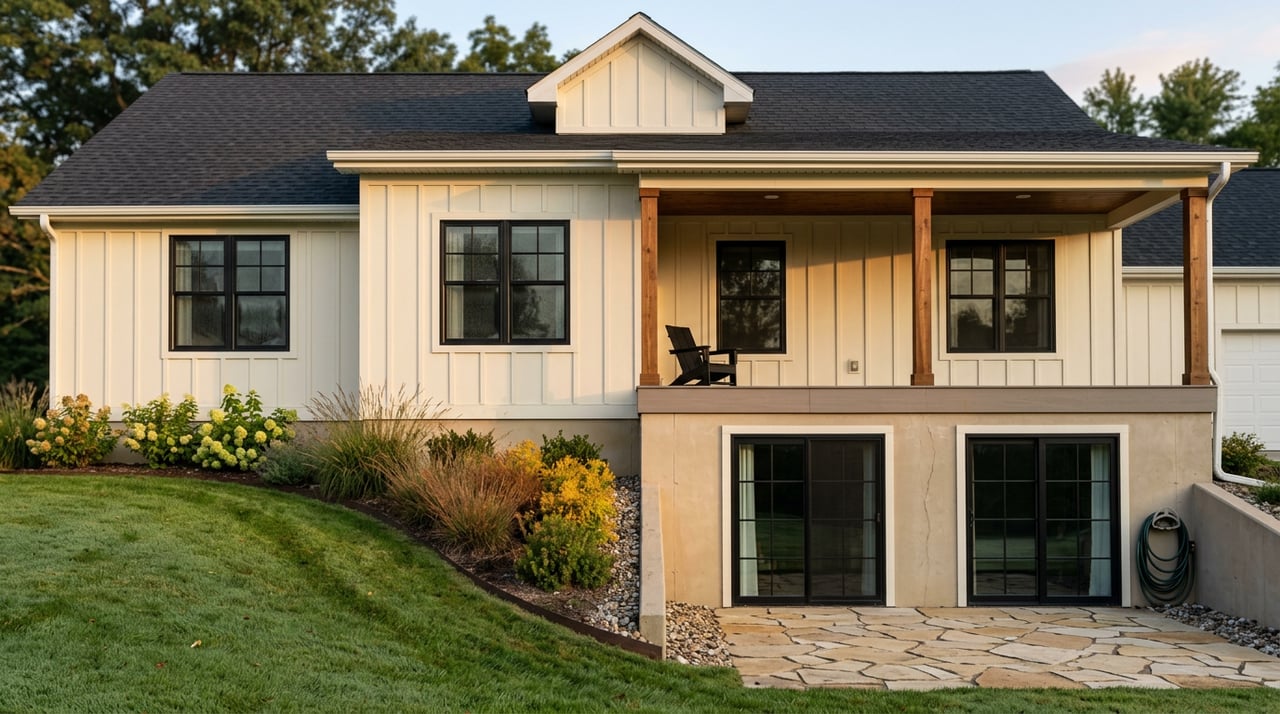
The single-family and small multifamily rental market in Lincoln has been behaving differently from the apartment sector this year. As of April 2026, demand for rental houses in the city has remained strong enough that well-priced homes are leasing quickly. That tracks with what the vacancy data can't see: Lincoln's employment base, anchored by the University of Nebraska and state government, keeps a steady pool of renters looking specifically for a house rather than a unit inside a 200-door complex.
If you're weighing whether to hold onto a rental property, or buy one, in Lincoln right now, the citywide apartment vacancy number is close to irrelevant to that decision. What actually matters is what's happening on your block, in your price range, in your specific property type. A few practical checks before you lean on a headline stat:
- Ask what building size the data you're reading actually covers. If it comes from Yardi Matrix, CoStar, or a similar institutional tracker, it's very likely built from properties of 50 units or more.
- Look at what's under construction within a mile of your property, not just citywide. The projects reshaping Lincoln's numbers this year are concentrated downtown, in the Haymarket, and around Bishop Heights specifically.
- Compare your property type to the actual competition. A renter comparing a Country Club District 55+ community with a house near a Lincoln Public Schools elementary boundary is looking at two different types of rental property.
A Better Comp Than a Citywide Average
None of this means Lincoln's apartment boom is irrelevant to a small landlord. New downtown supply can eventually pull renters who might otherwise have looked at a house, and it's worth watching whether any of it starts to compete for your specific tenant pool over time. But treating a 50-plus-unit institutional vacancy rate as a stand-in for your rental's market position skips the one step that actually answers the question: pulling comps for properties like yours, in your specific part of the city.
That's the kind of local read Summit's agents and the RLC Property Management team pull together for owners across Grand Island, Lincoln, and Kearney, whether you're deciding what to charge for a lease renewal, whether now's the time to add a rental property, or whether an existing one still pencils out the way it did when you bought it.
FAQ
Does more apartment construction in Lincoln mean rents on my house should come down? Not automatically. The new supply named above is concentrated downtown, in the Haymarket, and in one age-restricted community, and it's aimed at a different renter than most single-family rentals attract. Watch your specific submarket and property type rather than the citywide apartment number.
Is this a bad time to buy a rental property in Lincoln? The data doesn't point that way. Lee Associates' report found the city absorbed roughly 1,300 net new apartment units over the year leading into Q1 2026 even with heavy new construction, which points to real renter demand rather than a market losing tenants.
Where can I find vacancy or rent data that actually includes houses and small multifamily properties? Most of the widely quoted reports, including the ones referenced here, are built on institutional trackers that only capture buildings of 50 units or more. For a read on smaller properties, local leasing activity and direct comps in your specific neighborhood are far more reliable than a citywide average.
If you own a rental in Lincoln, or you're weighing whether to buy one, Summit Real Estate can pull the comps that actually apply to your property instead of a number built for a different kind of building. Contact us today.