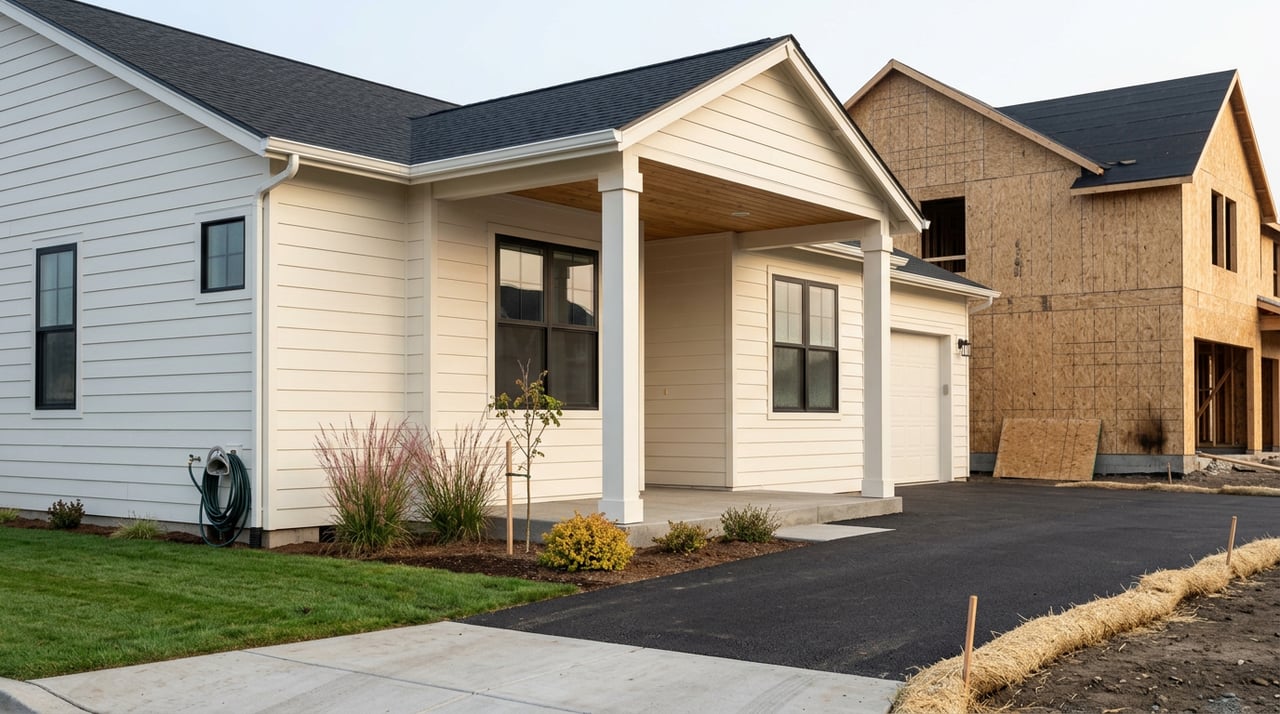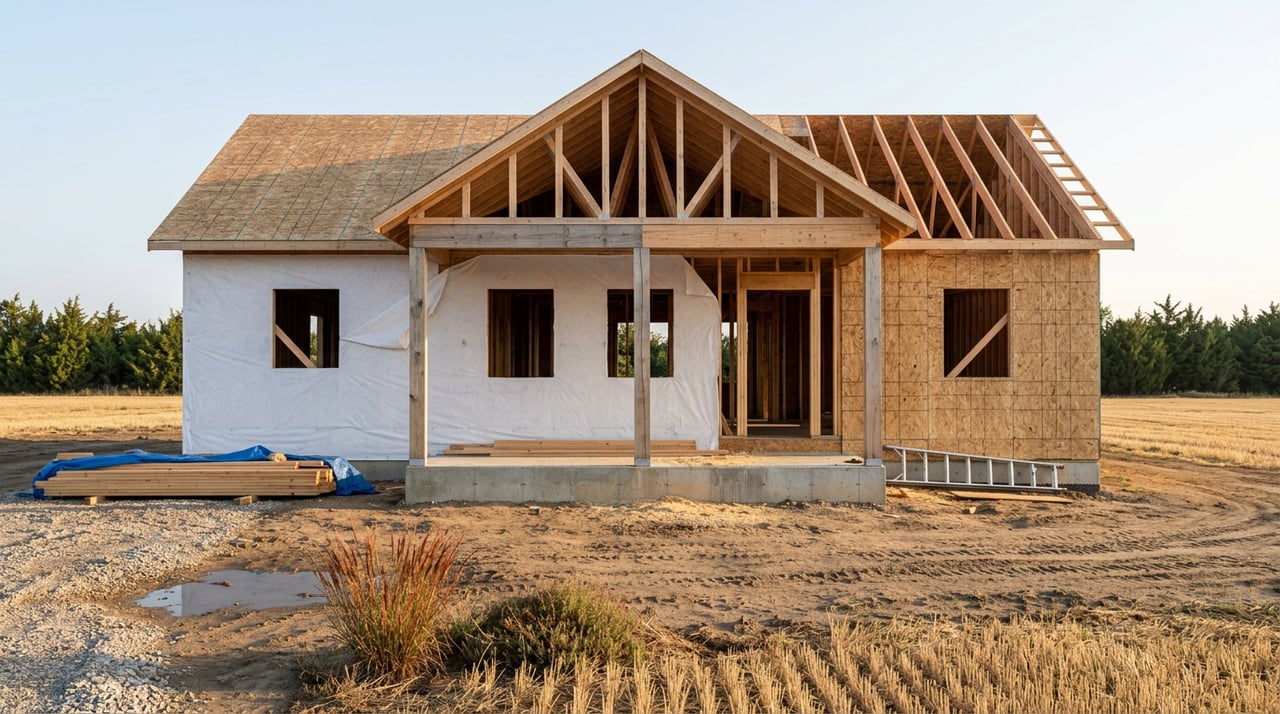
On July 29, the Grand Island City Council voted to move forward on selling a piece of the old Grand Island Veterans Home site, the next step in a 375-acre project Mayor Roger Steele has called the largest development undertaking in the city's history. Two weeks earlier, a 10.354-acre commercial parcel in the San Tan subdivision went on the market for $390,000, with city water, sewer, power, and its own irrigation well already run to the property line.
Neither of those facts sounds like farmland news. That's the point.
The story that's been circulating all year is that Nebraska farmland is getting cheaper. The University of Nebraska-Lincoln's 2026 Farm Real Estate Market Survey, released in March with values as of February 1, put the statewide all-land average at $3,905 per acre, down 1% from $3,935 the year before. It's the second straight annual decline, coming off a 2024 record of $4,015 per acre, and the survey pins the slide on lower crop prices, high input costs, and interest rates that remain above their 10-year average.
If you own or want to buy ground in Hall County, that headline is close to useless. The same survey shows the Central Ag Statistics District, the region that includes Grand Island, moving in the opposite direction of most of the state.
The Number Everyone's Quoting, and the One They're Skipping
The Nebraska Farm Bureau's breakdown of the 2026 survey notes that while most districts saw land values slip 1% to 3%, with the sharpest declines in the Southeast, the Central district's overall land value rose 2%. The same divergence shows up at the crop level. Center-pivot irrigated cropland, the state's most valuable land class, fell 2% statewide. In the Central and South districts specifically, it rose 2%.
| Land type | Statewide change (2026) | Central district change |
|---|---|---|
| All-land average | down 1% | up 2% |
| Center-pivot irrigated cropland | down 2% | up 2% |
| Nontillable grazing land | up 7% (statewide high) | up 6% to 9% |
The survey doesn't spell out why Central and South moved against the grain on irrigated ground specifically. It reports the split by district without assigning a single cause to it. What it does make clear is that anyone quoting the statewide average to a Hall County landowner is citing a number that, by the survey's own regional breakdown, didn't happen here.
What's Actually Pulling Prices Near Grand Island
Even the ag survey's local bump doesn't tell the full story, because a growing share of land near Grand Island isn't pricing as farmland at all anymore. It's pricing as development land, and that market runs on a different clock than crop yields or cattle receipts.
Three things happening around the city right now show what that looks like in practice:
- The Good Life District. The council's July 29 vote to offer the Veterans Village parcel for sale, plus an ordinance expanding the district's occupation tax, are the latest steps in a 375-acre project on the former Veterans Home site that's been working through city approvals for months.
- Prairie Commons. In 2024, the commercial campus was named Development of the Year by the Commercial Real Estate Summit, the first time in 35 years that award went to a project outside Lincoln or Omaha. As of this spring, developer representative Bullington said fewer than 20 acres remained, with roughly two to three more years of build-out ahead.
- Habitat for Humanity's 15 acres. In April, Grand Island Area Habitat for Humanity closed on 15 acres for a future housing development, adding another buyer competing for land at the city's edge rather than in its cropland interior.
Prairie District, the residential community built around lakefront and off-water homesites, is leaning into the same growth story. As one of the community's developers, Rief, put it earlier this year:
"We want to start recruiting professionals to Grand Island so they can start enjoying the joys of living in a smaller, big town."
That's a recruiting pitch, not a farm report, but it explains the buyer pool showing up for land near these corridors. They aren't bidding on bushels per acre.
The Real Spread: Cropland Versus Corridor
The gap between an ag-priced acre and a development-priced acre in Hall County isn't small. The San Tan subdivision parcel that listed this July, a B-2 zoned tract with utilities already stubbed to the site, priced out at roughly $37,667 per acre. Current listings across Grand Island as of August 2026 average closer to $63,000 per acre overall, with raw undeveloped parcels averaging around $55,600 per acre. Compare either number to a Central district irrigated acre, which the 2026 survey shows moving by low single digits in either direction, and the multiple is stark.
Other active subdivisions tell the same story without the same precise math. Johnson Acres, just across the county line in Merrick County near Jackrabbit Run Golf Course, and Covenant Estates on the city's east side off Cherry Street and Bismark Road are both marketing acreage lots for buildable homesites rather than row crops. None of that activity shows up in a farm real estate survey built to track cropland and pasture. All of it shows up in what a seller can actually ask for a parcel that touches a growth corridor.
What This Means If You're Buying or Selling Land Here
If your parcel sits well outside any development footprint and functions as straight cropland or pasture, the Central district's ag numbers are still your right anchor. A modest single-digit move on irrigated ground, or a stronger gain on grazing and hayland tied to cattle prices, is a reasonable expectation, and it's a very different conversation from the statewide decline making headlines.
If your parcel touches or sits near an active corridor, whether that's the Good Life District's footprint, Prairie Commons' remaining acreage, or an established subdivision with utilities already in place, it stopped being an agricultural asset for pricing purposes some time ago. Comping it against the county's farm real estate average will undersell it. Comping it against recent development-land sales, like the San Tan parcel or current subdivision listings, gets you closer to what buyers are actually paying.
For 1031 exchange buyers and land investors weighing Hall County ground, the split matters for underwriting, too. A pure ag comp moves with crop and cattle economics you can track through the annual UNL survey. A development-adjacent parcel moves with absorption at Prairie Commons, the pace of Good Life District build-out, and how fast the city extends water and sewer lines. Those are two different risk profiles wearing the same zip code.
A Few Questions Worth Asking Before You Price Land Here
Does this mean all land near Grand Island is getting more valuable? No. The gains are concentrated in parcels tied to development corridors or in grazing and hayland benefitting from strong cattle prices. Straight cropland well outside those corridors is still largely following the statewide trend of tighter crop margins.
Is the Good Life District finished? Not yet. As of the July 29 council vote, the city was still working through a resolution to offer the Veterans Village parcel for sale and amending the district's economic development program. It remains a multi-year build-out.
Why did irrigated cropland rise in the Central district when it fell almost everywhere else? The 2026 UNL survey reports the regional split without attributing it to a single cause at the district level. It simply shows Central and South as the two districts where center-pivot ground moved higher while the rest of the state moved lower.
Land in Hall County is being priced by more than one market at once, and the statewide farmland headline only tells you about one of them. If you're weighing a parcel near Grand Island, whether it's raw acreage, a subdivision lot, or ground close enough to a growth corridor to matter, Summit Real Estate can walk through what's actually driving comps on that specific piece of ground. Contact us today.