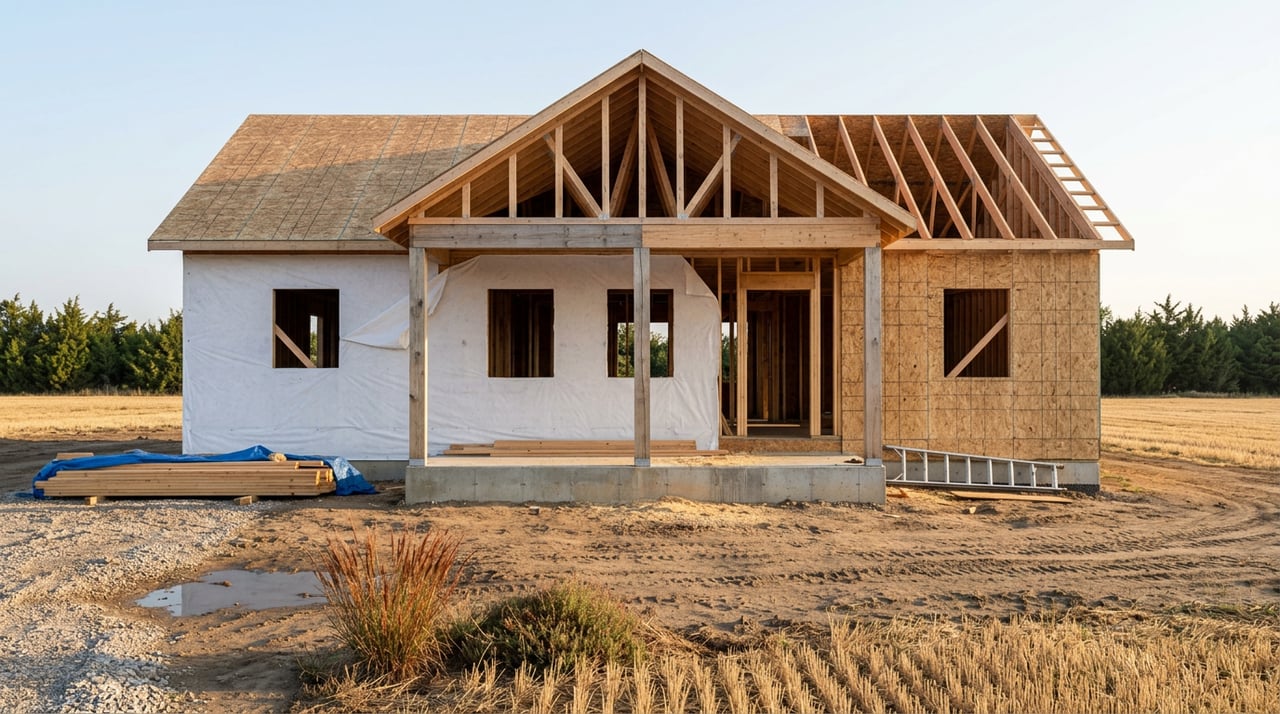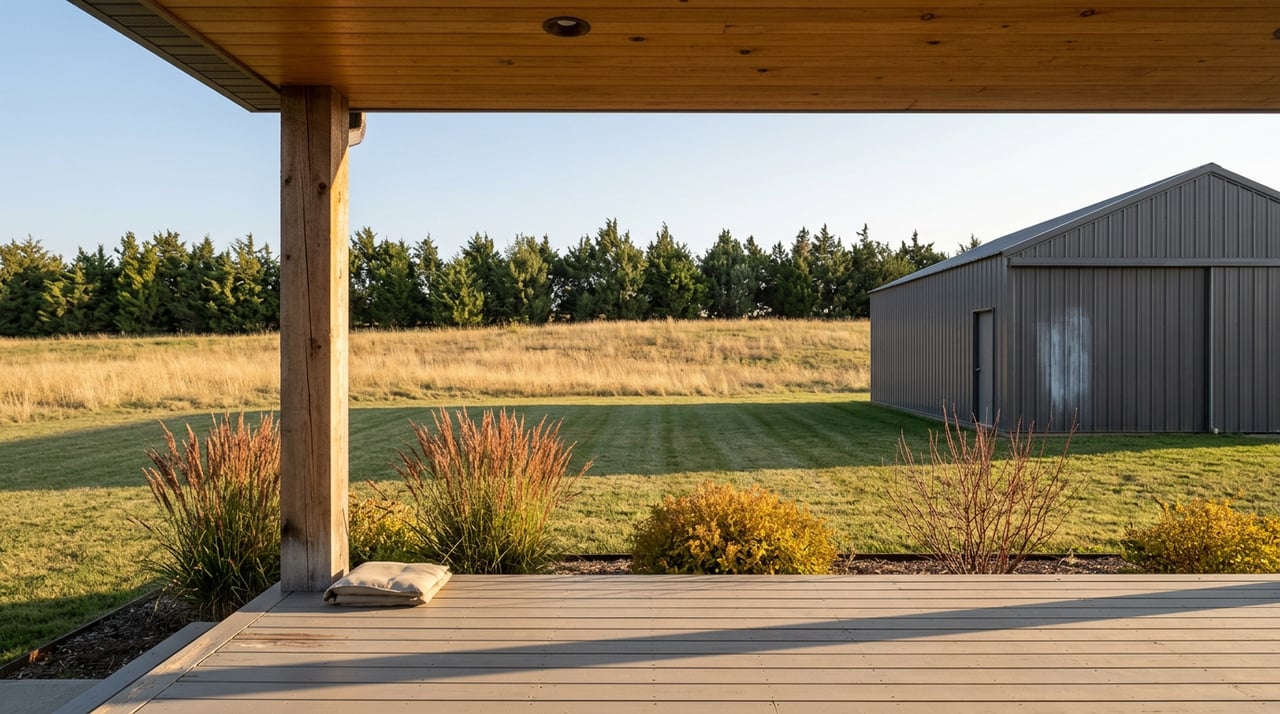
Walk the prairie loop at Pioneers Park Nature Center on any weekday morning and you'll pass the bison enclosure, cut past the raptor exhibits, and eventually hit a fence line where the mowed path stops and the tallgrass just keeps going south. Most people turn around there. The land beyond that fence used to be somebody's cropground. As of this summer, a good chunk of it belongs to the city.
That fence line is the edge of the Prairie Corridor on Haines Branch, a trail and prairie-restoration project that's been under construction in slow motion since 2017. In June, Lincoln closed on nearly 100 more acres southwest of Pioneers Park, paying $924,630 through a partnership between the City of Lincoln, the Lower Platte South Natural Resources District, and the Solidago Conservancy. On paper that's a routine land deal. In practice it moves a project that was supposed to take two decades a lot closer to finished, a lot faster than anyone announced it publicly.
The Twenty-Year Plan, Nine Years In
Lincoln Parks and Recreation director Maggie Stuckey-Ross put a number on this in an August interview with KOLN: "When we announced in 2017, we said, give us 20 years." Nine years later, the department says it has secured roughly 75 percent of the land needed for the full corridor, a continuous run of tallgrass prairie the city is aiming to connect by 2037. Stuckey-Ross's own read on the pace: "We have made more progress than we could have predicted in 2017. So will it happen faster than 20 years? At this pace, I think it absolutely will."
That's the detail worth sitting with if you live anywhere near south Lincoln. A project announced as a someday amenity, the kind of thing you file away and forget about, is running ahead of its own timeline. The finished corridor will carry a 14.5-mile trail linking Pioneers Park Nature Center to the Spring Creek Prairie Audubon Center near Denton, following the Haines Branch of Salt Creek the whole way. It will also restore close to 2,000 acres of tallgrass prairie and preserve another 3,400 acres of native prairie along the route, according to reporting on the June acquisition. Less than 1 percent of Nebraska's native tallgrass prairie remains today, a point the Lower Platte South NRD's general manager, David Potter, has made repeatedly to explain why this particular stretch of ground matters.
What's Actually Underfoot Right Now
None of that 14.5-mile figure is a single continuous trail yet. What exists today is Pioneers Park Nature Center's own network, which has been open for decades and isn't going anywhere while the rest of the corridor catches up. The nature center covers 668 acres of prairie, woodland, and wetland and offers more than eight miles of hiking trail, plus the bison, elk, and white-tailed deer exhibits that make it a regular stop for families with young kids.
A few practical details worth knowing before a visit:
- Address: 3201 S. Coddington Ave.
- Hours: Monday through Saturday, 8:30 a.m. to 5 p.m., Sunday noon to 5 p.m. through summer; facilities close at 4:30 p.m. starting in fall.
- Admission is free, with a suggested donation of $3 per person, $5 per family, or $10 per group.
Everything south of that existing trail network, including the newly purchased 100 acres, is not open to the public yet. According to Lincoln Parks and Recreation's own comments to KOLN, that parcel should open sometime between the end of this year and next spring, but full connection depends on a bridge similar to the one already built at Wilderness Park. Bridges are the slow part of trail construction. Land acquisition can happen in a single closing. A river crossing takes engineering, funding, and time.
Why This Is a Flood Project as Much as a Trail Project
The bridge comparison to Wilderness Park isn't incidental. Stuckey-Ross has tied the entire corridor back to a specific piece of Lincoln history: in the early 1900s, a major flood destroyed development that had gone up in what's now Wilderness Park, and people died. Her point, made directly in the same KOLN interview, is that undeveloped floodplain does a job that houses can't. "You can't and shouldn't build in these flood-prone areas," she said, describing the corridor's role in reducing downstream flood risk as much as its role in recreation.
That reframes what looks like a nice-to-have hiking amenity as something closer to infrastructure. The prairie absorbs water that would otherwise run off into Salt Creek and the neighborhoods along it. A trail happens to run through that buffer, but the buffer is the point.
Cody Houston, a neighbor quoted by KOLN, underscored the case for protecting the prairie: "It seems like a good idea for the prairie. The prairie needs an advocate, somebody to speak out for it because it's not going to do it on its own." Land acquisition of this kind depends on willing sellers and patient negotiation, one parcel at a time, which is a slower process than any press release makes it sound.
Part of a Bigger Trail Habit, Not a One-Off
The Prairie Corridor isn't Lincoln's only active trail project this year, and it helps to see it in that context. The city's Parks and Recreation department maintains 185.9 miles of trails citywide, spread across 168 parks. Separately, planners have been evaluating seven parks around town, including Standing Bear, Jensen, Arnold Heights, Roper East, Holmes, Oak, and Bowling Lakes, for new singletrack, the narrow unpaved bike trails that Lincoln currently has in only two locations, both on the south side. A cyclist quoted in that planning process said he'd welcome something on the west side of town instead of having to drive across the city just to hit a trailhead.
Read against that backdrop, the Prairie Corridor looks less like an isolated conservation project and more like one piece of a longer pattern: a city that keeps investing in the connective tissue between its parks, even when the payoff takes years to show up on the ground. If you've noticed more trail construction signage around town this year, or more conversation among neighbors about where the next mile of path is headed, this is the biggest single piece of it.
What to Watch For Next
If you already walk or bike the existing Pioneers Park Nature Center trails, the practical takeaway is patience with a deadline attached. The newest 100 acres are not open yet, but Parks and Recreation's own estimate puts an opening window at the end of 2026 or into next spring, contingent on that bridge getting built. Full connection to Spring Creek Prairie Audubon Center and the Village of Denton remains years out, but a project that told the city to expect 20 years is currently running ahead of that pace, which is worth remembering the next time someone assumes a public land project like this will always be late.
For now, the nature center's eight miles are open daily, the bison are still visible from the main loop, and the fence line south of the exhibits marks the edge of what's coming rather than the end of the story.
If you're weighing what it's actually like to live near Lincoln's growing trail network, or you're comparing neighborhoods with this kind of green space in mind, the team at Summit Real Estate knows these corners of the city well enough to walk you through them block by block. Contact us today.