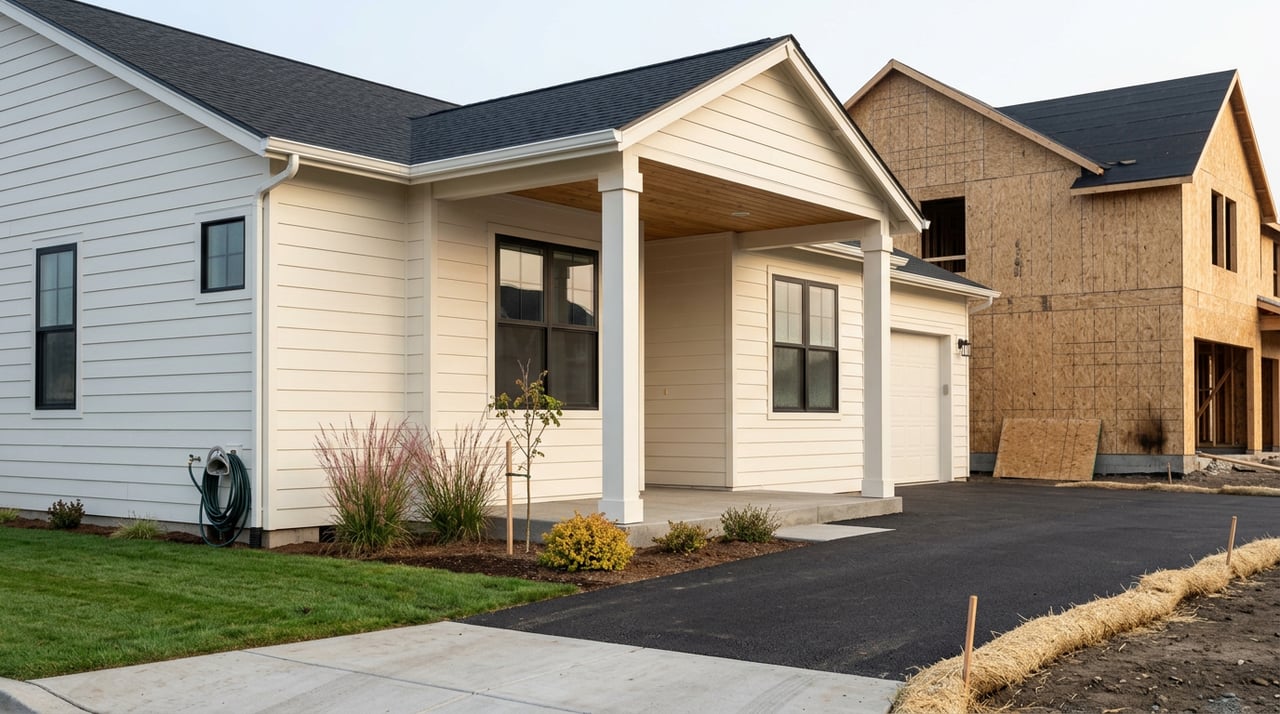
Ask three real estate sites how fast homes are selling in Kearney right now and you'll get three different answers. One says five days. One says twenty-one. One says thirty-five. All three are technically accurate, and none of them tell you what you actually need to know if you're trying to time a purchase or a listing here this fall.
The more useful number didn't come from a portal at all. It came out of a Kearney Planning Commission meeting on March 26, 2026, where staff signed off on three separate subdivision additions that will add roughly 114 new residential lots to the city over the next several building seasons. That's not a headline anyone chases. But it's the piece of information that actually tells you where this market is headed, because it's the supply response to the price run that everyone else is busy reporting on after the fact.
The Number Everyone's Quoting
Here's the price story making the rounds. Over the three months ending May 2026, Kearney's median sale price hit $340,000, up 18.1% from the same stretch a year earlier, with the median price per square foot up 10.8% to $148. Ninety-one homes sold in May 2026, compared with 81 in May 2025. That's a market moving in one direction, and it's the number most buyers see first when they start looking at Kearney from out of town.
The days-on-market figures are where the story gets less tidy.
| Source | Metric | Figure |
|---|---|---|
| Redfin | Average days on market, 3 months ending May 2026 | 21 days (up from 16 a year earlier) |
| Zillow | Average days to pending, updated June 30, 2026 | About 5 days |
| Homes.com | Average days listed before sale, as of May 2026 | 35 days |
None of these are wrong. They're measuring different moments in the same transaction. A "days to pending" figure, which is what Zillow reports, stops the clock the moment a seller accepts an offer. A "days on market" figure that runs through closing, which is closer to how Redfin and Homes.com describe their numbers, keeps counting through the weeks of inspection, financing, and title work that follow. A home that goes under contract in five days can still take another month to actually close. Both numbers are true. They just answer different questions, and a buyer who only sees the five-day figure walks into a showing with the wrong expectation about how much competition they're facing before an offer is even accepted.
That gap matters more in a market where prices are climbing fast, because it changes how a buyer should read urgency. Five days to an accepted offer is the number that should worry you if you're deciding whether to write a strong first offer. Twenty-one to thirty-five days to close is the number that tells you what the rest of the process will feel like once you're under contract.
What the City Just Approved
While portals were compiling those numbers, the city was doing something that won't show up in any of them for months: platting the ground where next year's inventory is going to come from.
Three additions came before the Kearney Planning Commission on the same March 2026 agenda, each with its own developer, its own acreage, and its own place on the map.
- Spruce Hollow Estates Ninth Addition covers 22.26 acres generally between 17th Ave. and Buffalo Hills Elementary School, north of 56th St., and creates 46 lots ranging from 0.24 to 0.74 acres. The land was rezoned from agricultural to low-density residential. Property owner DT Development, Inc. is behind the filing.
- The 12 Kids Addition sits near H Ave. and M Ave., south of 11th St., on 12.75 acres owned by Gene McElhinny. It's platted into 44 lots, 43 residential and one out lot, rezoned to mixed-density residential.
- Fountain Hills Sixteenth Addition takes 36.72 acres at the southeast corner of 54th St. and 15th Ave. and divides it into 51 lots. The land was originally part of a preliminary plat approved back in 2006, and the current filing comes from Grand West, LLC.
Engineer Craig Bennett of Miller & Associates represented all three before the commission. City Planner Melissa Dougherty-O'Hara's staff review found each addition compatible with surrounding zoning and future land use, and the commission voted to recommend approval to the city council.
The Spruce Hollow filing is the one worth sitting with for a second. That neighborhood's first subdivisions were platted in 2006. Twenty years later, the ninth and apparently final addition is what's clearing the commission now. That's not a hot market chasing a sudden opportunity. That's a builder finishing a project on a timeline that predates most of the buyers currently searching in Kearney.
Why the Lag Is the Point
New lots don't turn into move-in-ready homes overnight. Between a plat approval, infrastructure work, and a builder actually pulling permits, it's common for a year or more to pass before a subdivision like Fountain Hills Sixteenth or the 12 Kids Addition starts putting finished houses on the market. That lag is exactly why the March 2026 filings matter now, in August. The lots approved this spring are the homes that will start competing with resale inventory sometime in 2027, not next month.
That timing gap is useful in two different directions depending on which side of a transaction you're on.
If you're buying and you're weighing whether to move now at today's median price or wait for more choices, the honest answer is that meaningful new supply from these three additions is still a year or more out. Waiting for the 12 Kids Addition or Fountain Hills Sixteenth to relieve price pressure means waiting through at least one more building season, not one more listing cycle.
If you're selling into a market where the median has climbed 18.1% year over year, the incoming lot supply is a reason to think about your own timeline rather than assume this rate of appreciation holds indefinitely. A seller who lists this fall is competing against today's resale inventory. A seller who waits until new construction from these additions reaches the market is competing against builders who can offer buyers a blank slate.
Neither of those is a reason to panic in one direction or the other. It's a reason to ask a more specific question than "is Kearney hot right now."
A Better Way to Ask the Question
Before you anchor a decision to any single stat from a portal, it's worth running through a short list with whoever is helping you buy or sell:
- Is the days-on-market figure you're looking at measuring time to accepted offer, or time to closing?
- Which part of town is the median price actually describing, and does it include new construction or only resale homes?
- Are there platted additions nearby that haven't broken ground yet, and roughly when would finished homes from those additions realistically hit the market?
- If you're selling, how does your specific block or subdivision compare to the citywide median, rather than the median itself?
None of those questions have a single universal answer. They depend on which street you're on, which builder is active nearby, and how far along a given addition is in the pipeline. That's exactly why a citywide stat, however accurate, only gets a buyer or seller partway to a decision.
FAQ
Does the new lot supply mean Kearney home prices will start falling? Nothing in the current data points to that. Median prices were still up 18.1% year over year as of the three months ending May 2026. New lot approvals typically slow the rate of appreciation over time by adding choices for buyers, but the lag between a plat approval and a finished, move-in-ready home is long enough that any effect on pricing would show up gradually, not as a sudden shift this year.
Why do Zillow and Redfin report such different numbers for the same city? They're measuring different stages of the same sale. A days-to-pending figure counts only the time until a seller accepts an offer. A days-on-market figure that runs through closing keeps counting through the escrow period that follows. Both are accurate, but only one of them tells you how long the full process is likely to take.
Where can I find out about other subdivisions in the pipeline? Planning commission agendas and minutes are public record and typically posted by the city ahead of each meeting, along with the acreage, lot counts, and developer names for anything up for a vote. That's the same kind of filing that produced the Spruce Hollow, 12 Kids, and Fountain Hills additions covered here.
Reading a market accurately means looking past whichever number loads first on your phone. If you're trying to figure out what a specific Kearney neighborhood or a specific incoming addition means for your timeline, Summit Real Estate works this market daily and can walk through what's actually in the pipeline near the home you're watching. Contact us today.