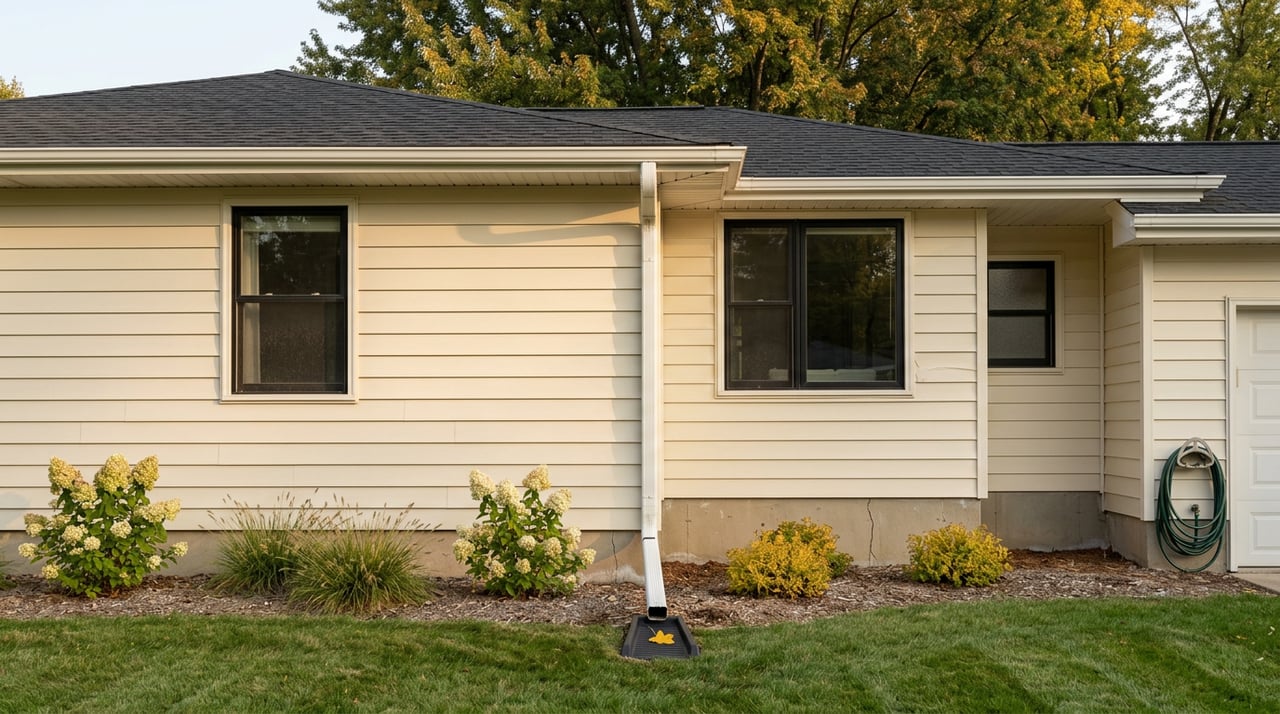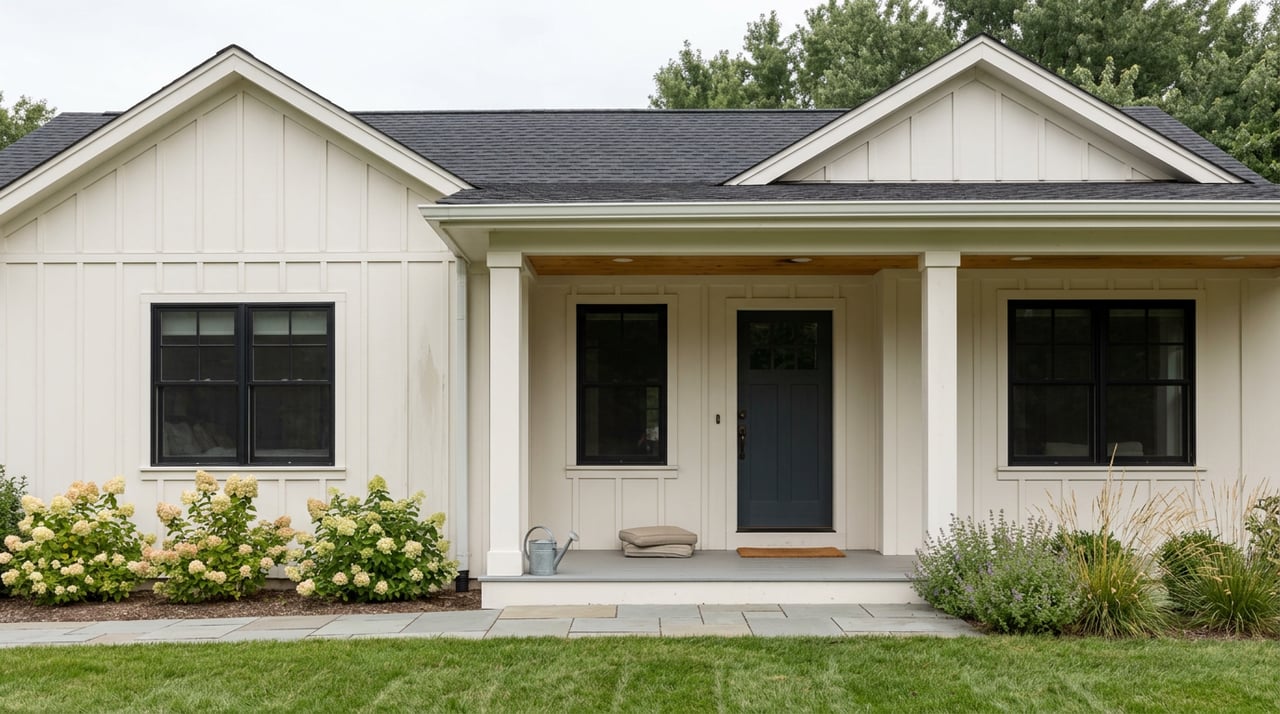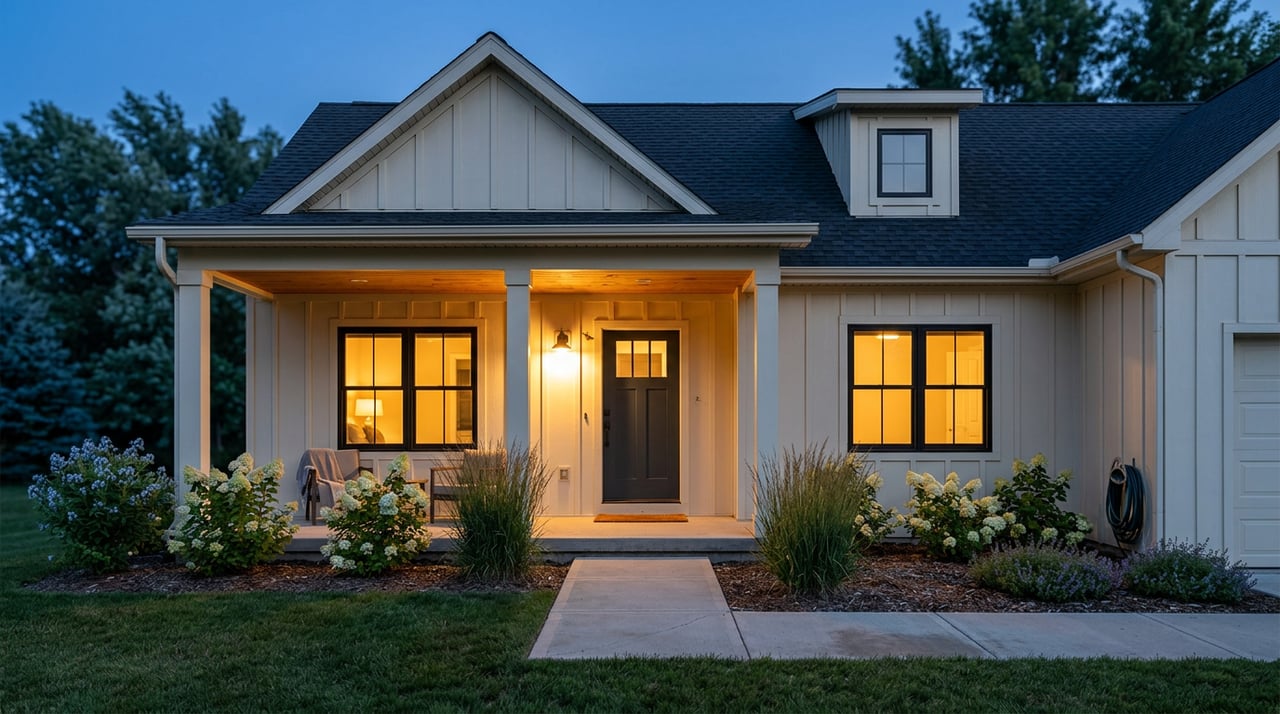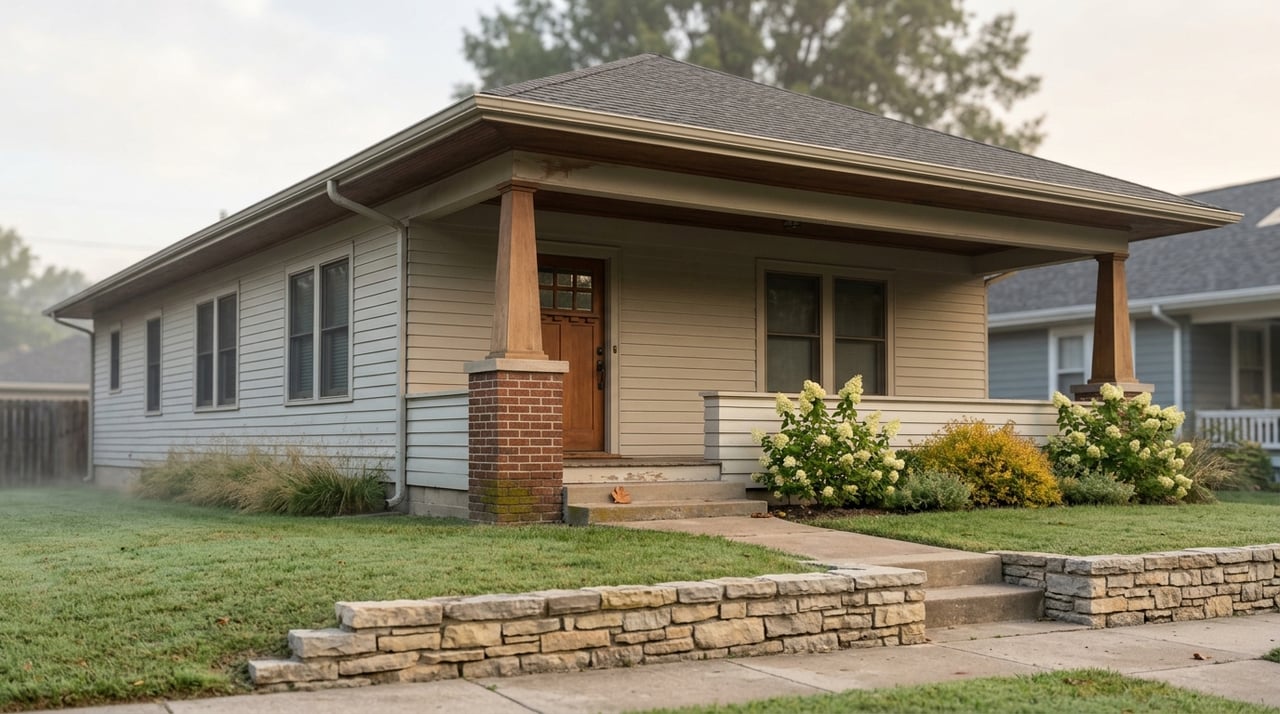
Here is the scenario that plays out more often than anyone likes to admit in Lincoln's oldest blocks. A buyer falls for a foursquare on a shaded street in Near South or a bungalow near Havelock's old rail line, writes a strong offer to win it against competing bids, sails through the general inspection, and starts picking paint colors. Then, two or three weeks before closing, the insurance agent calls. The home still has active knob-and-tube wiring in the attic and basement joists. The standard carrier that was supposed to write the policy will not touch it. Without a bindable insurance policy, the lender will not fund the loan. The closing date that felt locked in is suddenly a question mark, and the buyer is scrambling for coverage with less than a month on the clock.
This is not a story about a defect an inspector missed. It is a story about what happens when a home's age collides with how mortgages actually work: no insurance, no funding, no closing, regardless of how clean the rest of the file looks.
The real deadline is the binder, not the walkthrough
Buyers spend most of their attention on the inspection period, and for good reason. But a Nebraska purchase contract has a second, quieter gate that has nothing to do with the buyer's satisfaction and everything to do with the lender's requirements: proof of a bound homeowners insurance policy before the loan can fund. Most standard, admitted-market carriers will decline to write a new policy on a home with active knob-and-tube wiring, full stop. That decision is not up for negotiation the way a repair credit is. It is an underwriting rule, and it does not care how much the buyer loves the house or how motivated the seller is to close.
The workaround exists, but it takes time to arrange. Surplus lines carriers, the specialty insurers who take on risks the standard market won't, will typically write a policy on a knob-and-tube home, but at two to three times the standard premium, with deductibles often set at $2,500 to $5,000, and usually with a condition that the wiring be replaced within six to twelve months. A state Fair Access to Insurance Requirements plan can serve as a bridge, satisfying the lender's requirement for coverage while a rewire is scheduled, but it is not a policy anyone wants to keep long term. Nebraska's average homeowners premium runs around $3,050 a year, so a buyer looking at surplus lines pricing should expect that number to roughly double or triple until the wiring is replaced and a standard carrier will take the risk back.
The wiring issue may not be apparent from a listing sheet and can surface during underwriting.
Why this problem clusters in Lincoln's oldest neighborhoods
Knob and tube wiring was the standard residential method from roughly the 1880s through the 1930s and 40s, which lines up closely with the building years of several of Lincoln's oldest neighborhoods. Hartley, one of the city's earliest suburbs east of downtown and north of O Street, is a residential area of houses built between 1890 and 1940, squarely inside the knob-and-tube era. Havelock was founded in 1890 along the Burlington and Missouri River Railroad and was not annexed into Lincoln until 1930, after an eight-year standoff between the town and the city, which puts much of its original housing stock in that same window. It still holds its Tuesday afternoon farmers market today. Near South, just south of downtown, is home to many of the city's grand historic homes and is in the middle of a neighborhood-association-driven push to convert properties that were once divided into apartments back into single-family houses, a project that tends to surface exactly this kind of electrical question. Malone, tucked between the old Missouri Pacific rail line and O Street, is another of the city's early platted neighborhoods where a buyer should expect to ask the same questions before writing an offer.
Near South is a useful case study for what buyers are actually paying to get into this housing stock. Vintage listings there have carried a median asking price around $240,000, with most homes spending about six weeks on the market before selling. That is not a luxury price point. It is a first-move-up or first-home price point, which means the buyers most likely to encounter the knob-and-tube insurance problem are often the ones with the least room in their budget to absorb a financing delay or a surprise rewire bill.
Three ways to get insured, compared
| Coverage path | Typical premium | Typical deductible | Catch |
|---|---|---|---|
| Standard admitted carrier | Baseline (roughly $3,050/year statewide average) | Standard | Most decline to write a new policy on active knob-and-tube |
| Surplus lines carrier | 2 to 3 times standard | $2,500 to $5,000 | Usually requires rewire within 6 to 12 months |
| State FAIR Plan | Above standard, limited coverage | Varies | Bridge coverage only, meant to be replaced once rewired |
The FAIR Plan and surplus lines routes exist precisely so a closing does not die on the spot. But both require an independent insurance agent who knows to shop the excess and surplus market, and both require the buyer to start that process the moment knob-and-tube is confirmed, not the week before closing.
What a rewire actually costs, and what it buys back
A full knob-and-tube rewire typically runs $8,000 to $25,000, clustering around $12,000 to $18,000 for a home in the 1,500 to 2,000 square foot range that describes a lot of the housing in Near South and Hartley. On a per-square-foot basis, plan on $4 to $10 for the electrical work itself, before any drywall or plaster repair, which is the part people are most often surprised by. On a $240,000 purchase, a $15,000 rewire is roughly six percent of the price, money most buyers were not planning to spend in year one.
The upside is that once the rewire is complete and documented with permits and a licensed electrician's certification, most standard carriers will reconsider the home entirely. The risk profile changes overnight, from an outright decline to a normal quote. The electrical work itself generally takes three to ten working days on an occupied home, with crews restoring power each evening, which means the rewire itself does not have to be the thing that blows a 30 to 45 day Nebraska closing timeline. The insurance shopping and lender coordination around it is what needs the lead time.
For homeowners considering the work outside of a transaction, John Henry's is one of the Lincoln contractors that lists rewiring old homes among its electrical services, alongside panel upgrades and code compliance assessments, which gives a sense of the kind of licensed electrician a buyer or seller needs to call for a pre-offer inspection rather than a general handyman.
A sequence that keeps the deal alive
- Before writing an offer on any home built before 1950 in Near South, Hartley, Havelock, or Malone, ask the listing agent whether the wiring has been updated, and get a straight answer in writing if possible.
- If the answer is unclear, hire a licensed electrician for a targeted electrical inspection during the general inspection period, not after. This is a different, more specific report than what a standard home inspector provides.
- Call an independent insurance agent, not a captive agent tied to one carrier, the same week. Ask specifically whether they can quote a surplus lines policy or a FAIR Plan bridge policy if the wiring turns out to be active knob-and-tube.
- If a rewire is needed, get a written quote and a realistic start date from the electrician before the financing contingency deadline, so the timeline is a known quantity rather than a surprise at underwriting.
- Keep every permit and inspection document. That paperwork is what convinces a standard carrier to quote a normal rate once the rewire is finished, and it is the same paperwork a future buyer's lender will want to see.
The exception almost nobody mentions
Here is the detail that can save a deal that looks dead on paper. FHA appraisal guidelines actually accept knob and tube wiring, as long as it is in good condition and the home has a minimum of 60 amps of electrical service. A buyer using FHA financing on a Near South or Hartley home is not automatically blocked the way a conventional buyer relying on a standard carrier might be. The insurance requirement still applies separately from the appraisal, so a FHA buyer still needs a bindable policy, but knowing that the loan program itself is more flexible than the insurance market changes how a buyer and their agent sequence the conversation with the seller.
FAQ
Does every old house in Near South or Hartley have knob-and-tube wiring? No. Many have been partially or fully rewired over the decades, especially homes that went through a kitchen or bathroom remodel where an electrician was already opening walls. The only way to know for a specific address is a licensed electrician's inspection, not an assumption based on the build year alone.
Can a seller do anything to get ahead of this before listing? Yes. A pre-listing electrical inspection, paired with a written scope and cost estimate if a rewire is needed, turns a scary unknown into a priced line item a seller can either fix, credit, or disclose clearly. That is far less disruptive than a buyer discovering it during their own inspection period and renegotiating from a position of leverage.
What if the wiring is fine and this doesn't apply to my house? Even homes with confirmed grounded wiring built in this era often carry other systems from the same period, aging cast iron sewer lines or galvanized plumbing among them, that insurers and lenders scrutinize in similar ways. The lesson holds either way: know what a licensed specialist finds before you are under contract, not after.
If you're weighing a home in one of Lincoln's older neighborhoods, or wondering how much room a fixer-upper's price actually leaves for a project like a rewire, the team at Summit Real Estate can walk through the specific street and the specific house with you before you write an offer. Contact us today.
This article is general information, not legal, tax or financial advice. Consult a qualified professional about your situation.