Most Grand Island sellers treat the inspection as a hurdle that happens after an accepted offer. That's the wrong frame. In a market where the median home price is $195,000 and homes spend an average of 17 days on market as of July 2026, the report a buyer's inspector hands over on day 12 will shape your net proceeds more than your list price did. The seller who reads that report first, before it exists, keeps the leverage.
Here's the claim this post is built around: in Nebraska, the pre-listing inspection is not a repair decision. It's a disclosure decision. The state's Seller Property Condition Disclosure Statement rewards documented knowledge and penalizes selective memory, and Grand Island's housing stock and geology make three findings almost predictable. Knowing which three, and getting them on paper before a buyer's inspector does, is how sellers protect price in the last two weeks of escrow.
The Statute Is the Real Deadline
Before you order a single service call, understand what you're signing. Nebraska sellers of one-to-four-unit residential property complete the Seller Property Condition Disclosure Statement under Neb. Rev. Stat. § 76-2,120, and the form is delivered by the seller or the agent of the seller to the purchaser or the agent of the purchaser on or before the effective date of any contract which binds the purchaser to purchase the real property. In practice, that means the form travels with the listing, not with the closing packet.
Three mechanics inside the statute deserve close reading:
- "Do not know" is a legitimate answer. If any information required by the disclosure statement is unknown to you, you may indicate that on the disclosure statement and still be in full compliance with the statute. That answer shifts the burden of investigation to the buyer.
- Personal knowledge is the liability line. The seller shall not be liable under this section for any error, inaccuracy, or omission of any information in a disclosure statement if the error, inaccuracy, or omission was not within the personal knowledge of the seller.
- The window closes quickly. Any action to recover damages under the cause of action shall be commenced within one year after the purchaser takes possession or the conveyance of the real property, whichever occurs first.
Read those together and a strategy falls out. If you commission a pre-listing inspection and repair what it finds, you disclose the repair and move on. If you commission one and do not repair, you disclose the finding and price accordingly. If you skip the inspection entirely, "do not know" is available for issues you truly haven't observed, but any Grand Island seller who has lived through a wet spring and never noticed the crack in the basement wall will have a hard time defending that answer later. The disclosure form is signed at listing. The statute of limitations does not start until possession changes hands. The gap between those two dates is the exposure window.
The Three Findings Grand Island Sellers Should Expect
Ask a central Nebraska inspector what shows up in the summary section of a Grand Island report, and the same categories cycle through. They line up with the age of the housing and the ground it sits on.
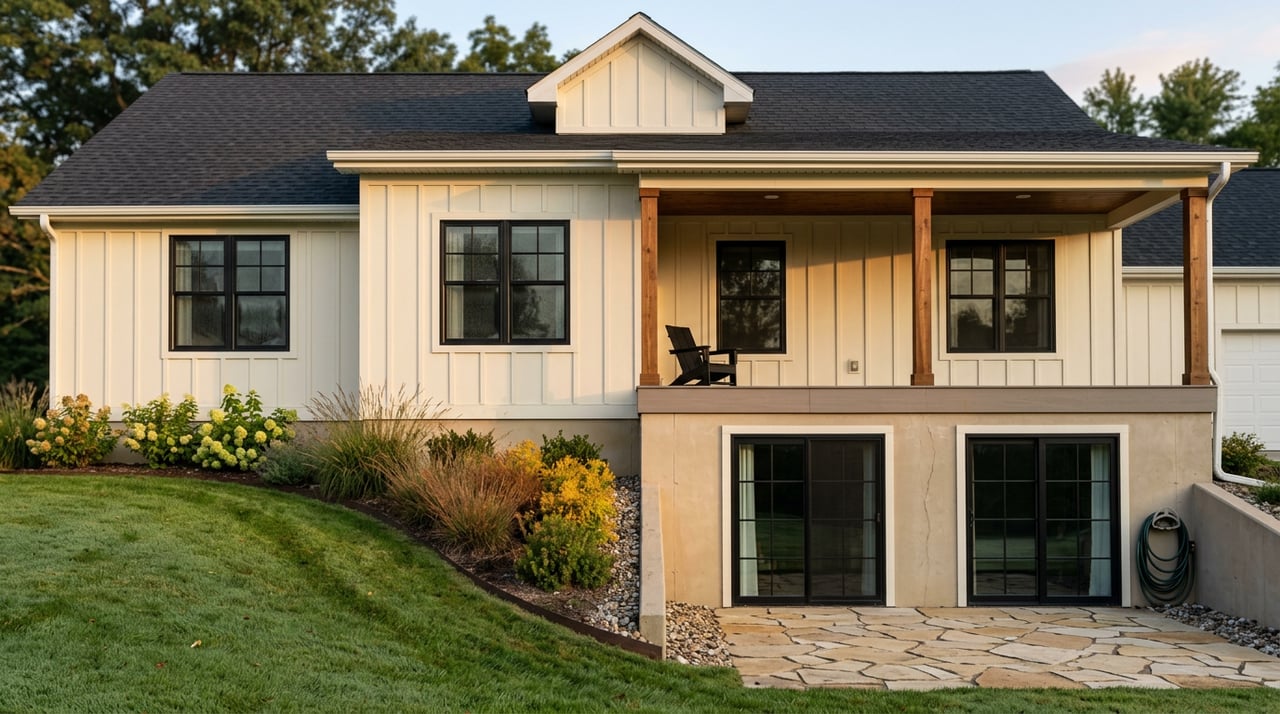
Foundation and crawl-space movement. 45% of Grand Island's housing was built before 1980, meaning older foundation designs and materials that are more susceptible to settlement and cracking. The mechanism is not mysterious. With 29.0 inches of annual snowfall and 6,198 heating degree days, Grand Island experiences significant freeze-thaw cycling that forces soil to expand and contract around foundations. This repeated movement is a leading cause of foundation cracking and settlement in Hall County. The tells an inspector will photograph are exactly the ones you can walk your own property looking for: uneven floors, sagging rooflines, or doors that won't close properly. If any of that describes your house, order the specialist evaluation before a buyer's general inspector recommends one, because "structural engineer required" as a line item in a buyer's report is a renegotiation trigger. As a rough planning number, minor crack repair in this region runs a few hundred dollars, while full pier underpinning can range from $5,000 to $15,000 or more.
Radon. This one is not optional in Nebraska, and it is the finding sellers most often try to answer "do not know" on when they shouldn't. In Nebraska, more than half of radon tests exceed the Environmental Protection Agency's (EPA) action level of 4 picocuries per liter, with some areas reporting levels as high as 100 picocuries per liter. At the state level, Nebraska has 93 counties, with 53 classified as EPA Zone 1 (highest risk). A buyer who orders a radon test as part of their inspection contingency and gets a 6 pCi/L reading on your basement bedroom will come back asking for a mitigation credit. Two firms working central Nebraska handle this in-house: CNHInspections is a veteran-owned, family-operated home inspection company proudly serving the majority of Nebraska. Owners Christopher and Lauren Underwood bring a strong foundation of experience, integrity, and personal service to every inspection, and Christopher is a Nebraska Licensed Radon Measurement Specialist. Five & Two Inspections serves Lincoln, York, Aurora, Grand Island, Kearney, Columbus, Central City, Hastings, St. Paul, and Loup City, NE and offers radon mitigation systems custom-tailored to your home. If you test, you disclose. If you mitigate, you disclose that too, and the mitigation transfers with the house.
Aging systems and prior amateur work. In the pre-1980 portion of the market, general inspectors flag the same categories repeatedly: fuse panels, cloth-jacketed wiring, water heaters past useful life, roofs on their third patch, and permit-less remodels done by a previous owner. The last one carries a particular sting because impromptu modifications or repairs performed without proper permits often signal deeper problems. If you inherited an unpermitted basement finish from a prior owner, that's a disclosure question with a real answer, not a shrug.
How to Sequence a Pre-Listing Inspection
If the disclosure form is the deadline and the three findings above are predictable, the sequence matters more than the checklist. A workable order for a Grand Island seller preparing to list:
- Walk the property with the report categories in mind. Doors that stick, hairline drywall cracks radiating from window corners, damp smells in the lowest level, and the age plate on your electrical panel are all things you can note in one afternoon.
- Order a general inspection two to four weeks before listing. In this market, CNHInspections limits itself to one inspection per day, dedicating full attention to your home before, during, and after the inspection. That format is useful when you want an inspector who will walk the property with you rather than hand you a PDF.
- Layer in a radon test at the same time. The kit sits for at least 48 hours. If you start it the morning of the general inspection, results are back before your photographer arrives.
- Get bids, not repairs, on anything structural. A written scope from a foundation contractor is a document you can hand a buyer during negotiation. It converts a scary open question into a priced line item.
- Update the disclosure form as you learn. Nebraska law lets you deliver an updated statement, and doing so before a contract is signed is far cleaner than amending after inspection objections.
Reading the July 2026 Market
The reason this sequencing pays off right now is the shape of the current market. Grand Island isn't a runaway seller's market and it isn't a buyer's market. The Grand Island, NE housing market is somewhat competitive, scoring 55 out of 100. The average Grand Island house price was $275K last month, up 12.2% since last year. Movoto's June 2026 snapshot puts the median days on market at 40, the same as June 2025, while a competing dataset shows 17 days on market for actively sold homes. Both can be true. Well-prepared homes clear quickly. Homes with visible deferred maintenance sit.
In that split market, the inspection report is the mechanism that decides which side of the median you land on. A buyer looking at two similarly priced homes will lean toward the one with a pre-listing inspection binder on the kitchen counter, because it removes the number they fear most: the unknown one.
FAQ
If I pay for a pre-listing inspection, do I have to share it with buyers? The inspector's contract governs who receives the report. As a practical matter, a home inspector is only required to give a copy of their report to the party who hired them, so only a seller would receive a copy of a pre-listing inspection report. You can choose to share this report with the other party, but this isn't a common practice. What you cannot do is claim ignorance on the disclosure form about a defect that appears in a report you paid for and read.
Does Nebraska require me to disclose a death that occurred in the home? No. There is no law that requires disclosure of death in the house to the buyer. Material property defects are a different matter and must be disclosed if within your personal knowledge.
Is new construction exempt from the disclosure statement? Yes. Certain transfers are exempt from the disclosure requirements, including foreclosure sales; sales under court orders; sales by bankruptcy trustees; sales under trust deeds; estate sales; sales from co-owners to other co-owners; sales from governmental agencies and sales of newly constructed property.
Selling a Grand Island home in 2026 rewards preparation more than pricing gymnastics. If you want a walkthrough of what your specific property is likely to surface on inspection, and how to sequence disclosures around it, the team at Summit Real Estate is glad to sit down with you before you list. Contact Us Today.